


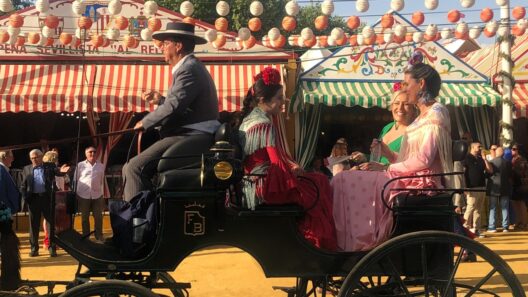
The Spanish feria is one of the great expressions of Andalucian life, bringing together sevillanas dancing horses, casetas, food, drink and late-night celebrations that involve an entire community. Ferias began as livestock and agricultural trading fairs, but over the centuries they have developed into important social and cultural occasions.
From Marbella and Malaga to Seville’s famous Feria de Abril, these celebrations take place throughout spring and summer, making them a wonderful cultural experience for guests staying in Andalucia.
This guide covers everything you need to know about attending a Spanish feria, including how to dress, what to expect, where to go and how to make the most of the experience.
Spanish Ferias: What You Need to Know
- A Spanish feria is far more than a festival. It is one of the highlights of a town or city’s social calendar, bringing together food, sherry, sevillanas, horses and traditions rooted in Andalucian life.
- Seville’s Feria de Abril is the largest and most famous of Andalucia’s ferias, held in spring, usually around two weeks after Semana Santa.
- The Feria de Malaga in August is an excellent option for guests spending the summer in Andalucia.
- The Feria de San Bernabe in Marbella takes place in June and is the most convenient for guests staying in Marbella villas.
- The traditional daytime outfit for women is the traje de flamenca, while men generally dress smartly, particularly when visiting private casetas.
- Feria by day and by night can be two quite different experiences. The Feria del Dia brings families, horses, carriages and dancing into the sunshine, while the Feria de Noche continues with music, drinking and dancing until the early hours. Both are worth experiencing.
- The Luxury Villa Collection guest experience team can help with the practical arrangements, from private transfers and dress hire to exploring access to private casetas where possible.
What is a Feria?
Ferias began as livestock and agricultural trading fairs in medieval Spain. Malaga’s dates back more than 500 years, to the reconquest of the city by the Catholic Monarchs, while Jerez’s horse fair has its origins in the Middle Ages, with sherry later becoming an important part of the festivities. Seville’s Feria de Abril is a relative newcomer, established in the mid-19th century by two businessmen. It soon developed into a celebration of food, drink and music, as you might expect in a city as exuberant as Seville.
In Malaga, the Feria del Dia, held in the city centre until early evening, and the Feria de Noche, held at the fairground from around 9pm until dawn, have quite different atmospheres. The former is family-friendly, with food, sevillanas and horses, while the latter is more about late-night music and dancing. In Seville, the location remains the same, but the mood changes as evening approaches, along with the dress code.
A Spanish feria is quite a spectacle: rows of colourful casetas strung with paper lanterns, sevillanas drifting out of the tents, women in trajes de flamenca of every colour, horse-drawn carriages with smartly dressed drivers, the smell of freshly fried fish and manzanilla poured into small glasses.
Almost every town in Andalucia holds its own feria. The experience ranges from the enormous scale of Seville to the smaller, more local atmosphere of a village fair, and both are worth attending for different reasons.
The Major Ferias: Dates and Locations
Hundreds of ferias take place across Andalucia each year. These three, Feria de Sevilla, Feria de Malaga and Feria de Marbella, are among the most relevant for guests staying in Marbella and the wider region.
Dates can vary from year to year. The Feria de Abril follows the Easter calendar, while the Malaga and Marbella ferias are associated with local celebrations and patron saint days. Always check confirmed dates before planning your visit.
| Feria | Location | Typical dates | Duration | Day fair | Night fair | Best for |
|---|---|---|---|---|---|---|
| Feria de Abril | Real de la Feria, Los Remedios, Seville | April or early May | Around 6–7 days | Horses, carriages and traditional dress | Private casetas, dining and dancing | The full Andalucian feria experience |
| Feria de Malaga | Day: Historic centre around Calle Larios and Plaza de la Constitucion. Night: Cortijo de Torres fairground | Mid-August | Around 8 days | Lively, busy and hot | Music and dancing until dawn | First-time feria visitors |
| Feria de San Bernabe | Day: Marbella historic centre. Night: Arroyo Primero fairground | Around 11 June | Around 6 days | Traditional and family-friendly | Music and a younger crowd | Guests staying in Marbella |
Feria de Abril, Seville

Photographer credit: Tom Raftery
The Feria de Abril in Seville takes place in spring, usually around two weeks after Semana Santa. Declared a Festival of International Tourist Interest, it has more than 1,000 casetas and attracts millions of visitors during the celebrations.
It is the largest feria in Andalucia, with its own temporary town laid out across streets named after bullfighters. Every year, a new portada, or entrance gate, is designed and erected. The daytime fair is especially traditional, with horses and carriages processing around the recinto from lunchtime until early evening. Later, the celebrations continue inside the casetas and out on the streets. The drink of choice is rebujito, a refreshing mix of manzanilla sherry and lemon-lime soda.
The Feria opens with the alumbrado, the ceremonial switching on of the lights, while the traditional opening supper is pescaito frito, or fried fish. The middle of the week can be particularly busy, while Thursday is often a good day to visit between the opening celebrations and the weekend crowds. The Feria traditionally closes with fireworks.
Be aware that most casetas are private. You generally need to know a member or have an invitation to enter. There are also public casetas, marked on the fairground map, ranging from small and friendly to large and lively.
Our guest experience team can explore private caseta access and arrange transport from villas in Marbella and the Malaga area. Advance planning is essential, as invitations and transport need to be coordinated well ahead of the Feria. The team can also recommend dress hire options in Seville.
Feria de Malaga
The Feria de Malaga takes place in August, usually during the second or third week. The celebrations begin with fireworks over La Malagueta beach, often accompanied by a drone display.
The Feria del Dia takes place in the streets of the historic city centre, where people sing and dance throughout the afternoon until around 6pm. The Feria de Noche is held at the Real de la Feria in Cortijo de Torres, on the city’s western outskirts. More than 200 casetas fill with people from the evening onwards, with music ranging from flamenco to contemporary pop and reggaeton. Free live concerts are also held at the Municipal Auditorium.
Hacienda El Palacito, a secluded six-bedroom villa set within its own country estate, is located close to Malaga city, making the Feria an easy day or evening excursion. The Luxury Villa Collection team can arrange private transfers from the villa.
If you need private transport from Marbella and Estepona villas, arriving in time for the evening celebrations and returning whenever you prefer, we can arrange that. Dress hire recommendations are available for those wishing to attend in traditional attire.
Feria de San Bernabe, Marbella
The Feria de San Bernabe takes place each June in honour of Marbella’s patron saint, San Bernabe, whose feast day falls on 11 June. The celebrations generally run for around six days.
This Spanish feria is the closest and most convenient option for guests staying in Marbella villas, including Hacienda Serai on the Golden Mile, which has extensive private gardens and accommodates up to 10 guests. The daytime fair takes place in and around Marbella’s historic centre and Plaza de los Naranjos, while the night fair brings music and dancing to the Arroyo Primero fairground.
The Feria de Marbella combines traditional Andalucian celebrations, with flamenca dresses and sevillanas, with the more cosmopolitan character of Marbella itself. It is an excellent introduction for guests attending their first feria.
For guests staying in Marbella, the Feria de San Bernabe is the easiest to attend. We can organise transport to and from the historic centre, recommend the best days and evenings to visit and advise on dress hire. Its June dates also make it well suited to an early-summer villa stay.
Villa Matches:
Villa Lorenea: A seven-bedroom private estate sleeping 14, set within 6,500m² of gardens on Marbella’s Golden Mile. With chef-prepared breakfasts, a private padel court and plenty of space for families, it’s a wonderful base for enjoying the Feria and returning to a little peace afterwards.
Villa Neroli: A five-bedroom serviced villa sleeping 10, within the grounds of the Marbella Club on the Golden Mile. With a heated pool, private spa and daily housekeeping, it combines easy access to Marbella’s Feria celebrations with the comfort and privacy of a luxury retreat.
What to Wear to a Spanish Feria
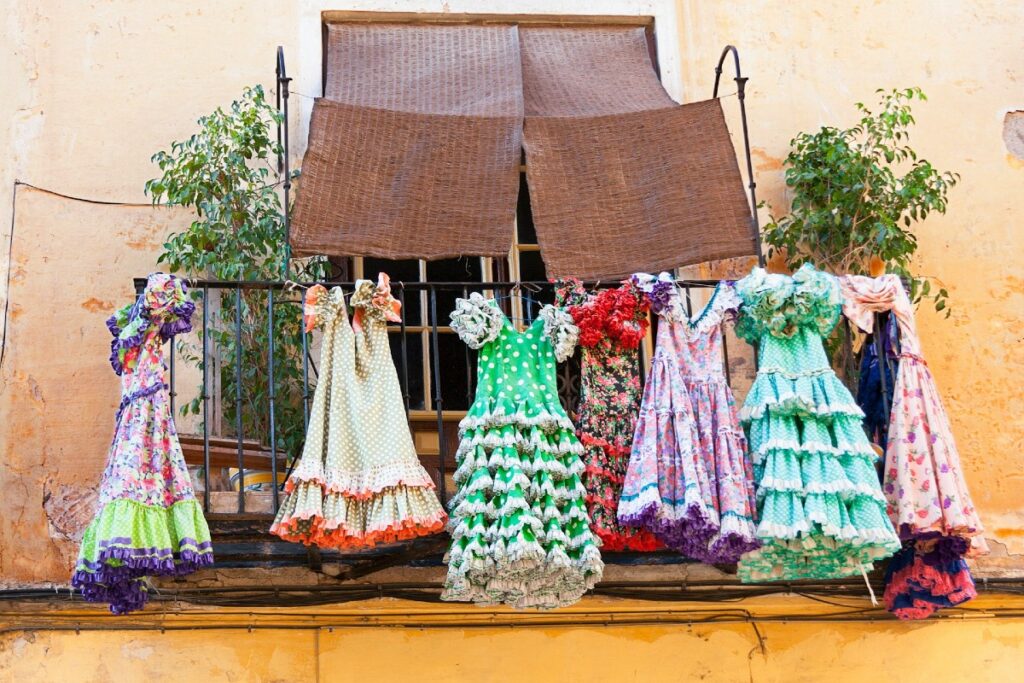
How you dress at a feria is part of the experience, particularly if you are visiting a private caseta. Think of it as cultural participation rather than simply choosing an outfit. A private caseta is much like someone’s home, and guests are expected to respect the dress code. Visitors who make the effort to wear traditional attire are usually warmly welcomed.
It is important to respect Spanish feria traditions, and that includes dressing appropriately. T-shirts and very casual clothing are generally best avoided, particularly in Seville, although smart shorts may be acceptable at some daytime fairs, including Malaga. For women and girls, wearing an elegant traje de flamenca can be a wonderful experience. Put on the fitted dress, add the accessories and you may find yourself walking around the recinto with an entirely different sense of confidence.
Women: The Traje de Flamenca
The traje de flamenca is one of the few traditional regional costumes in Spain that continues to evolve with fashion. The basic style features a fitted bodice over the bust, waist and hips, with a layered, ruffled skirt. Dresses come in plain colours, polka dots, florals and other prints.
The outfit is carefully accessorised, usually picking up one of the colours in the dress: flowers in the hair, an embroidered shawl, drop earrings and espadrille wedges. Many dresses also have a useful zipped pocket hidden in one of the underskirt frills.
Each year brings new trends in colours, fabrics and accessories. Terracotta, sage green, dusty rose and cobalt blue have all featured in recent collections, alongside sheer sleeves, oversized earrings and statement flowers. If you would like to wear traditional flamenca dress, hire and purchase options are available in Marbella and Malaga.
Dress checklist for a Spanish feria:
- Traje de flamenca, with fitted bodice and layered ruffled skirt
- Flowers in the hair, with or without a peineta comb
- Fan (abanico)
- Embroidered shawl, often a manton de Manila
- Drop earrings
- Esparto or cork wedge sandals, which are more practical than heels on uneven fairground surfaces
Our team can advise on dress hire and purchase in Marbella and Malaga, including the appropriate accessories for guests wishing to wear traditional attire. Arrangements should be made well ahead of the Feria.
Men: How to Dress the Part
Men should also consider what to wear to a Spanish feria. For private casetas in Seville, a blazer or smart shirt with tailored trousers is generally appropriate. Jeans, T-shirts and shorts are best avoided.
The traditional option for men, especially when riding or attending the daytime horse procession, is the traje corto. This consists of a short riding jacket, high-waisted trousers, riding boots and a Cordobes hat, traditionally grey with a wide brim and flat crown. It is a distinctive look that requires a certain confidence to carry off.
The Casetas: What They Are and How to Get In
Casetas are individually decorated marquee tents, often striped, with a bar, tables, a small dance floor and facilities. They are the social heart of the feria. Families, groups of friends and associations decorate their casetas with photographs, pictures and farolillos, the paper lanterns associated with the celebrations.
Most casetas at the Feria de Abril are privately run by families, social clubs, associations or political groups and are invitation-only. Public casetas are open to everyone and are clearly marked on fairground maps. They can be busy, particularly later in the evening, but have a welcoming atmosphere.
If you are invited into a private caseta, you will hear traditional sevillanas, sometimes performed by a live band, and see couples dancing the four-part sevillana. Sharing plates of jamon, seafood, cheese and tortilla de patatas are passed around, while rebujito is poured generously. These Spanish feria traditions are an important part of the social experience, and visitors are quickly drawn into the celebrations.
Food and Drink: What to Order

Rebujito is the defining drink of the Feria de Abril, made with manzanilla sherry, lemon-lime soda and plenty of ice. Light and refreshing, it is usually served in small glasses or bought by the jug to share.
On the menus in the casetas, you will find dishes such as pescaito frito, jamon iberico, cheese, tortilla española and fresh gambas. Lunch gets going from around 2pm and dinner from 9pm, although most people graze throughout the day and evening, often standing at the bar.
Food and drink checklist:
- Rebujito, manzanilla sherry with lemon-lime soda
- Pescaito frito, traditional fried fish
- Jamon iberico
- Tortilla española
- Gambas de Huelva
- Gazpacho, especially welcome in the daytime heat
- Manzanilla or fino, for those who prefer their sherry without a mixer
- Montaditos, small tapas served in a little bread roll or on top of crusty bread
Quality and prices vary between casetas. Private casetas can serve excellent food, although prices may be higher, while public casetas are often simpler and more affordable. Both can be thoroughly enjoyable.
Insider Tips for Getting It Right
- Best days to attend: Tuesday and Thursday can be good choices at larger ferias, offering a lively atmosphere without the busiest weekend crowds. Opening nights and final weekends tend to attract more people, although this varies by town and event.
- Timing for Feria del Dia: Arrive before 1pm to see the horses, carriages and paseo before the heat and crowds build. Riders in traje corto and open carriages carrying women in full flamenca dress are among the most memorable sights of an Andalucian feria.
- Timing for Feria de Noche: The night fair comes alive from around 10pm. Arriving at 9pm gives you time to find a caseta, secure a table and order food before the dancing gets into full swing. Many casetas stay open until the early hours, and partying until 2am is considered perfectly respectable.
- Transport: Arrange your return transport in advance. Crowded fairground exits full of tired feriantes are not the best place to negotiate a transfer. The Luxury Villa Collection team can take care of this ahead of time.
- Outfit preparation: Source dress hire and accessories well in advance, particularly for Feria de Abril, when demand in Seville is high. The Luxury Villa Collection team can recommend suitable suppliers.
- Managing the heat: The Feria de Abril and Feria de Malaga can both be warm, and many casetas are not air-conditioned. Carry a fan, drink plenty of water, find shade where possible and allow time to rest at the villa between the daytime and evening celebrations if you plan to attend both.
Of course, we can arrange private transfers, advise on dress hire, organise dinners and assist with the practical arrangements for feria visits from villas across Andalucia. The earlier these arrangements are made, particularly for Feria de Abril, the greater the choice available.
Experiencing the Feria from a Luxury Villa

A traditional Spanish villa to enjoy the feria
For guests staying at a villa with The Luxury Villa Collection, a feria visit can form part of a wider Andalucian cultural itinerary, alongside flamenco evenings, private wine tastings and guided visits to historic towns – we even have private villas right in the heart of the old towns like Ronda and Medina Sidonia for a full Spanish immersion.
Our guest experience team can take care of the arrangements so your group can enjoy a day or evening at the feria, or indeed both. This might include private transfers to and from the fairground, dress hire recommendations, sevillanas dancing tips and dinner reservations before or after the celebrations.
If you are planning a visit, explore our Character Collection which includes traditonal properties, often steeped in history, from which to enjoy the festivities. Our Villa Concierge and Experiences page explains the services available both when planning your holiday and throughout your stay.
Ready to Experience the Spanish Feria?
If you would like to experience Andalucian culture at its most celebratory, why not plan your stay around a feria? Alternatively, if one is taking place during your holiday, it is well worth setting aside a day or evening to join the festivities.
Staying in a private villa gives you the freedom to enjoy the celebrations at your own pace, with The Luxury Villa Collection team arranging transport, offering local advice and helping with access where possible.
FAQs
What is a Spanish feria?
A Spanish feria is a traditional annual fair that brings people together for several days of eating, drinking, dancing and socialising. Many have their origins in agricultural and livestock fairs and are now important events in the local cultural calendar.
When is the Feria de Abril in Seville?
The Feria de Abril usually takes place around two weeks after Easter, although the exact dates should always be checked for the year you intend to visit.
What should I wear to a Spanish feria?
Men should generally wear a smart shirt, tailored trousers and, for more formal casetas, a blazer. Women can wear a traditional traje de flamenca with accessories, or an elegant dress or other smart outfit. Dress codes vary between ferias and between public and private casetas.
What is rebujito?
Rebujito is a refreshing mixture of manzanilla sherry, lemon-lime soda and plenty of ice, traditionally served at Andalucian ferias.
How do I get into a caseta at the feria?
It depends on which feria you attend. At Seville’s Feria de Abril, most casetas are private and require an invitation, although public ones are available. At the Marbella and Malaga ferias, most casetas are open to the public.

Fiona Flores Watson
You might also like
